

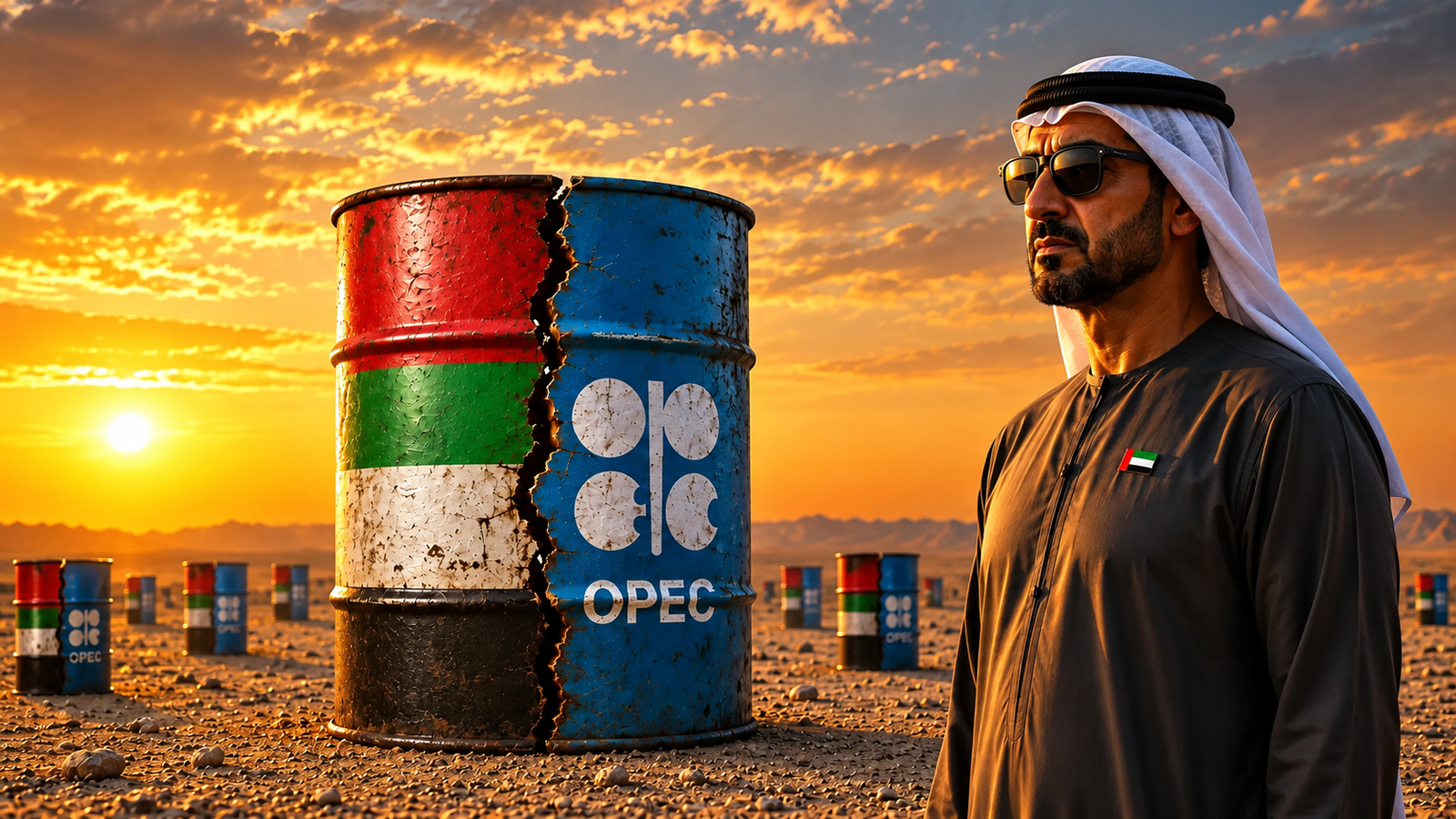
On the 1st May 2026, two months into the US-Israel war against Iran, UAE exited OPEC after nearly 60 years of membership.
What lies behind UAE’s move
According to analysts, the UAE has been preparing to leave OPEC for some time. As part of its strategic autonomy policy, the UAE has spent billions of dollars increasing oil capacity to nearly 5mn barrels a day. Such investments do not chime with OPECs dictate of production quotas of 3-3.5 mn even though it has turned a blind eye to the UAE consistently exceeding its quotas, perhaps thinking that this will keep it within the cartel.
Every dollar of oil left in the ground is a dollar forgone, constraining the UAEs return on investment.
Strategic autonomy also involves diversifying away from oil. Investment in AI (including the billions committed to Trump on his state visit to the Gulf in May 2025), financial services and real estate as well as tourism and entertainment are all designed to steer the UAE’s seven Emirates away from oil dependency.
Leaving OPEC is therefore UAE’s Brexit, providing it with the freedom to pursue other less volatile areas of economic activity, via a deepening strategic relationship with the US and Israel. These ties go beyond the economy. In the ongoing war with Iran, the IDF stationed Israel’s Iron Dome capability to protect the UAE from Iranian missiles while the US has signed new security guarantees. The UEA appears to be capitalizing economically on its very open policy of normalisation with Israel.
Thus UAE’s exit from OPEC is a geopolitical move. It signals the UAE isn’t tied to the Gulf Corporation Council and has much wider ambitions. GCC countries are in fact seen as competitors rather than compatriots, with the UAE vying for the same inward investments as Saudi Arabia and Qatar.
While the UAE’s OPEC exit is more strategic than tactical it’s been timed to rescue Trump from the damaging and costly war with Iran, especially its economic impact. UAE’s OPEC exit allows it to increase oil exports via its Fujairah terminal pipeline bypassing the Strait of Hormouz, easing pressure on oil prices that have been so harmful for the world economy.
End of OPEC?
OPEC is a production cartel with the objective of controlling oil supplies and thereby influencing global prices. UAE isn’t the first country to leave OPEC and, likely, with peak oil demand expected in the next decade, it will not be the last. Indonesia left in 2016, Qatar in 2019, Ecuador in 2020 and Angola in 2023.
UAE accounts for 3% of global oil production and even if it expands production to its potential of 5mn barrels a day it will still only account for 5% of world output.
UAE’s production, even if unhindered in the Strait of Hormuz, is therefore unlikely to materially impact global production, and oil prices, other than market sentiment.
UAE’s OPEC exit will however weaken Saudi Arabia’s control over oil supplies. Once the war is over, OPEC quotas on the remaining members may need to tighten to compensate for increased UAE production. This will increase pressure on other member countries to leave OPEC to fully capitalize on their oil investments before peak oil is expected to drive prices down.
Will UAE succeed
The UAE’s OPEC exit is a part of a wider strategic shift away from cooperation within the Gulf to competition between Gulf countries.
This is a natural consequence of Gulf nations adopting the capitalist economic model, with the UAE going further and faster than the rest. While Saudi Arabia (and other Gulf States) are not far behind and are actively pursuing normalisation they have still not publicly signed the Abraham Accords.
Despite its diversification policy, investment in AI and an independent go-alone attitude the UAE remains strategically and economically vulnerable. The UAE has recently requested the US for a currency swap to deal with a short fall in dollars from the US’s war with Israel. Its currency remains pegged to the dollar and so vulnerable to economic shocks from overseas. Its underlying economic model is dependent on foreign investment, foreign technology, overseas workers and now even dollar funding.
The UAE is deepening ties to the global capitalist architecture. A model of economic openness in a region of inherent geopolitical risk is extremely vulnerable to external shocks and contagion.
Rather than powering head-on and adopting the same capitalist framework that is failing in the West, as Muslims we should be more enlightened. Islam has given us through revelation from Allah (swt) a unique economic architecture anchored on a solid gold/silver-based currency and founded on market principles and wealth circulation within an independent and self-sufficient state.
“Verily, we were a disgraceful people and Allah honoured us with Islam. If we seek honour from anything besides that with which Allah honoured us, Allah will disgrace us”.
Umar ibn Al-Khattab
Aware Muslim | Empowering Bold Minds
