

🎧 Audio Discussion Included
Confidence in Shariah
The chief strategy in restoring confidence in any system and winning the battle of ideas, is through live demonstration. Western ideologues and far-right politicians often boast about Western liberalism and capitalism’s success in making modernity and creating the most advanced civilisation—one that supposedly provides the highest possible standard of living. They do not have to say or argue this; they just have to ‘be’ and to demonstrate. The example of of the use of American advancement, of culture at the end of the cold war with its music and TV and standard of living was one of the most effective tools. Effective societies just need to be there to be looked at and pointed to, or migrated to – their existence is their argument. Take, a very recent example, in Rees-Mogg’s presentation at the Oxford Union debate this summer, where, although he argued on the side of the Muslims that the West should not fear Islam, he argued that in the end ultimately Western civilisation is far superior as it is ‘successful’. It is this current in which we swim which forms the background against which this doubt in the Shariah and doubt in Islam as a system emanates.
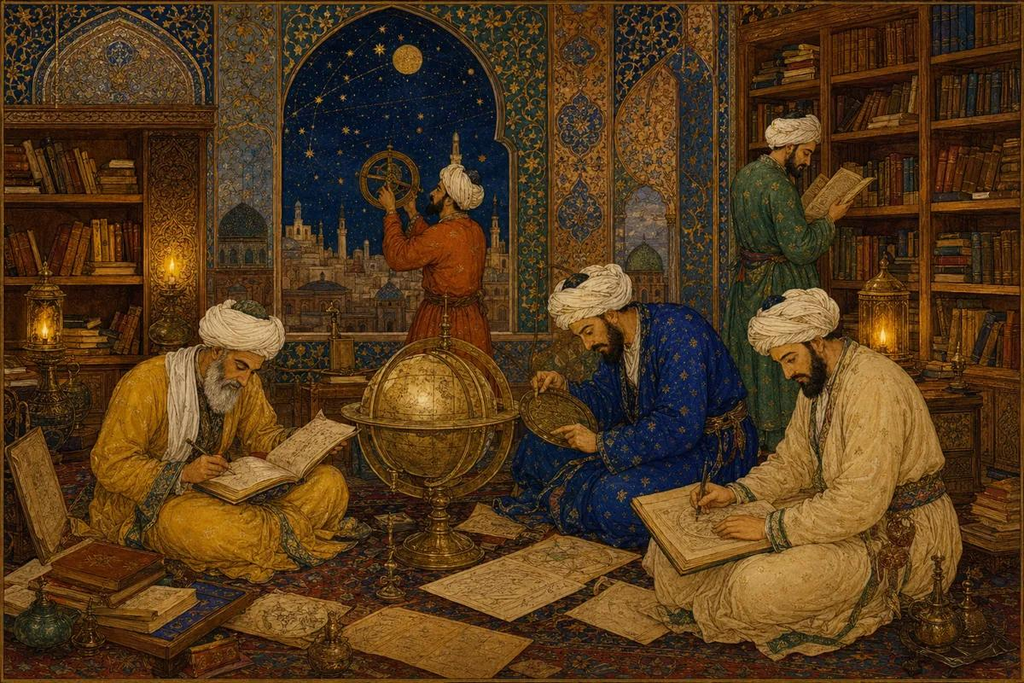
But this claim is devious and based on a careful manipulation and systematic covering-up of the facts in history and the present. For in fact if we look carefully, actually, almost every major facet of modern life in the West and otherwise actually has roots that can be traced back to Islamic civilisation and, in actually and intrestingly many cases, directly to the Shariah itself. These are not merely accidents but well documented patterns if you know where to look. Muslims it seems don’t seem to join the dots and make a coherent case of this. In fact, There are many real instances where at the heart of all major western institutions and practices in the constitutions, parliaments, in the technology in the west developed as actual and real direct consequences of the Qur’an, Hadith and fiqh—the very sources and legal principles that their critics so often oppose. What we have lost is our ability to communicate this point effectively and this is what the aim of this article is
But is this new information? well we are aware of the contributions of Islam to science who isnt it? There have been, of course 1001 books written on this topic. However, previous attempts at discussing science and Islam, and Islamic contributions to the world, on nearly every occasion fail to make the most important connection, which is that, in the vast majority of cases, these always come from the consequence of the Shariah rules and fiqh. This ranges from the mundane and trivial all the way to biggest institutions
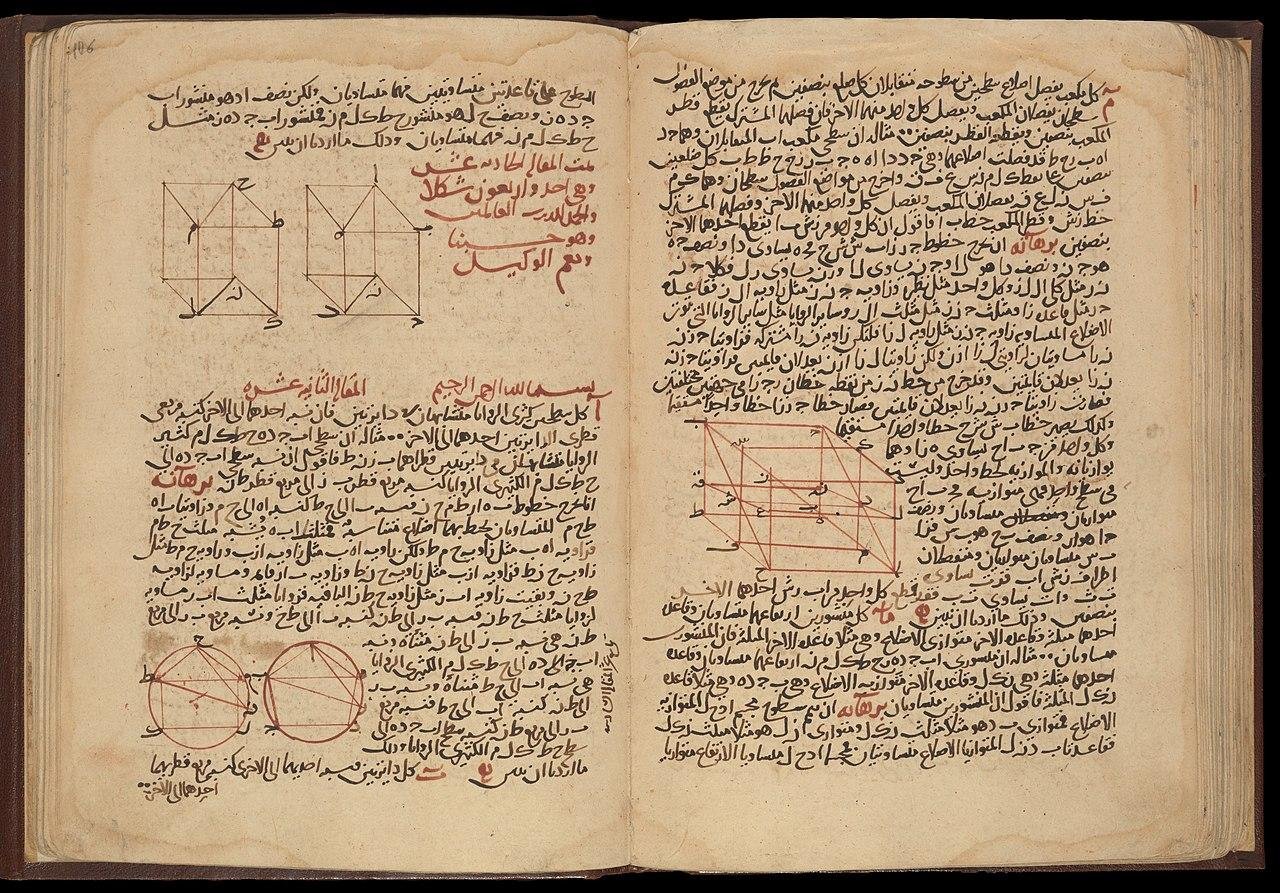
Take, for example, modern electronic and technology depedency on mathematics. We all know electronic infrastructure upon which modern life depends, phones, the internet, TVs etc rests upon developments in algebra, algorithms and related mathematical disciplines. We all know this can be traced in significant part to the book Kitāb al-Jabr wa-l-Muqābala (كتاب الجبر والمقابلة), of al-Khwarizmi, whose wrote the first major treatise on algebra. However Al Khawrizi writing when Vikings were savaging the coasts of England and Ireland was connected to a practical Shariah problem. This was his actual of his book Kitab. That is the calculation of complext inheritance shares outlined in the Qur’an and Hadith. Allah says:
“Allah commands you regarding your children: the share of the male will be twice that of the female. If you leave only two or more females, their share is two-thirds of the estate. And if there is only one, for her is half. And for one’s parents, to each one of them is a sixth of his estate if he left children…”Qur’an 4:11.
The complication of the inheritance fiqh and rules itself is what Khwarizmi dedicated his book to, he even wrote it at his introduction. Then it seems a host of ayah and hadith giving complex rules lead to algebra and algorithms and further development of maths and leading to modern electronics and technology. Or take, for example the Ombudmsan system. THis system of watchdogs overseas very imporant areas of life and shape our ability to pay for basic necessities such as the gas bills we pay to EDF or British Gas. The mechanisms governing these prices and making them affordable to all people can easily be shown to be linked to Islam. We can identify it’s influence from the Ottoman Mazalim system, which is influenced the Swedish government in the 1700s. This is even celebrated on one of the Swedish government’s website!
The Prophet ﷺ said:
«وَإِنِّي لَأَرْجُو أَنْ أَلْقَى اللَّهَ وَلَيْسَ أَحَدٌ مِنْكُمْ يَطْلُبُنِي بِمَظْلَمَةٍ فِي دَمٍ وَلَا مَالٍ»
“…I hope that I will meet Allah without anyone having a maẓlama against me concerning blood or wealth.” (Musnad Ahmad)
This hadith forged the creation of these very Mazalim courts in our fiqh literature which in turn led to the creation of ombudsman system in Sweden from the late ottoman period and then to the rest of the west. Ofcom and Ofgem, etc., which protect our ability to pay essential gas bills and water bills? But how many Muslims understand this when they go to pay their bills and of course how many non Muslims?
Then there are even remarkable mundane examples, the hadith:
“All of you are guardians and responsible for your wards and the things under your care. The Imam (i.e. ruler) is the guardian of his subjects and is responsible for them…”
Sahih al-Bukhari 893.
Who would think that such a hadith would explain an even more mundane example- The story of mozzarella! According to the historical accounts, mozzarella whuch originated from buffalo milk, introduced by Muslims into Italy during the Abbasid/Aghlabid period. The rearing of buffalo milk actually spread due to petitioning the Abbasid Caliph to introduce buffaloes to protect travellers from predator, as noted in the chronicle of al-Baladhuri
Then there’s the judiciary: a key are the checks and balances in any western society. The jury system has also been shown to actually be a fiqhi import from Sicily and the Maliki school of jurisprudence, where groups of twelve people were used to assess judicial evidence within the Qadi court system. This replaced the barabaric anglo saxon practice of trial by ordeal to decide peooples guilt. The jury introduced by Henry II was actually tutored by a Christian priest, Adelard of Bath, who travelled widely in the Muslim world and was a lover of Islamic and Arabic culture and told the young king to listen to the Arabs and Muslims and not europeans.
Then there’s the fight against the power of corrupt clergy in medieval times fought by Christians using books. The Islamic tradition of ikhtilaf—disagreement, debate and intellectual engagement—can be seen throughout works in islam such as Bidayat al-Mujtahid. Such intellectual traditions encouraged medieval Christian scholars to similarly organise, question, compare and standardise the positions of their own teachers, contributing to intellectual autonomy and, arguably, helping to return authority to wider society and away from a corrupt Catholic clergy. Here we can see Islamic intellectual culture provided, and continues to provide, an empowering force.
Or if we look at even rights of humans to humane treatement in the Geneva Conventions and modern principles concerning the conduct of war and humane treatment, which are also intrinsically linked to the establishment and development of the Red Cross. European encoutnered good treatment of prisoners and non-Muslim combatants with Abd al-Qadir al-Jazairi in the nineteenth century, which influenced Henri Dunant in the 19th centrury and the development geneva convetions war. Abd al-Qadir al- jaziri of course, was following the Shariah rules and the hadith where the Prophet ﷺ said:
“A woman was found killed, so Allah’s Messenger ﷺ forbade the killing of women and children.” Sahih al-Bukhari 3015.
Even the political system that the West carries to the world, democracy and liberalism, paradoxically owes more to Islamic political and intellectual traditions than Greek or Roman culture. Enlightenment thinkers such as Rousseau and Locke and others saw in Islam and the Ottoman model expression of freedom from tyranny, where law rules and everyone is under the law. They called this sometimes ‘Islamic republicanism’ and looked here rather than greece or rome. Locke who influenced the American constitution and Rossueu who was maybe the biggest influence on the French revolution saw in the Ottoman system a way where pluralism could exist under a single set of laws that acknowledged monotheism. Where the Prophet ﷺ said:
“Whoever killed a person having a treaty with the Muslims shall not smell the smell of Paradise, though its smell is perceived from a distance of forty years.”
Sahih al-Bukhari 3166.
They saw the ability to cater for different sects of christianity and religions. In the English Civil War and after, the idea of a social contract, and that ‘if a government turns tyrant they break the covenant and the people have a duty to remove them’ even Has echoes of the Hanafi rules of rebellion, where they argued that even sin would be enough to remove a Sultan or Khalif, as that would break bay‘ah and the covenant would not cover them.
It is therefore perhaps unsurprising that various English kings, on different occasions, were reported to have considered or threatened conversion to Islam. The famous example of Henry II and his son King John comes to mind.
If we are selling a product which is the system of Islam and its political system, we are maybe not doing the product justice if we are not communicating such a profound key selling points. The Islamic system itself is indispensable, as we cannot escape it. We need to not be on the defensive but wear the system with pride. It is the basis of general civilisation today.
Section – How Does the Shari’ah Enourage Civilisation
The Shariah is the will of the All Knowing and far surplants anything man can design. We can begin to get a taste its subtely in different ways:
1. **Reducing power imbalance** – The Shariah when surveyed tends to balance power in relationships between weak and powerful. An example of this is in fiqh contract sharecropping. This is a contract where agricultural workers have a share of what they plant with the original landowner. This is completely different from the christian medieval practice of only allotting peasants a farmer’s wage or no wage at all and undermined the evils of feudalism that ruined average peoples lives for 1000s of years and subjected them to poverty.
2. **Contractual basis and offer and acceptance** – This subverts a relationship between those with money and power and those that don’t, e.g., the bay‘ah, that makes power a contract and not a divine right given to someone just because of his family inheritance or from fate. It allows even the weak people to have a say and ensures accountability.
3. **Complexity** – E.g., fiqh of inheritance or even detemining things like the qibla on curved surfaces/globes which gave rise to complicated mathematical tools such as algebra, which created many of the technological advancements, or the complexity of fiqh, which then created useful tools like precedent in law or astronomical methods to work out qibla on curved surfaces.
4. **Unexpected consequences** – Rules that seem to cause other derivative factors of benefit to society, e.g., zakat a payment on wealth but also incentivises spending rather than keeping assets depreciating perpetually in people’s ownership. Incidentally, modern economists ended up doing the same by using inflation, economists set inflation at a target not below 2% for the same reason
5. **Progressiveness** – Example: the hadith on ‘ushr, which allots less tax if one irrigates land manually than if one uses rain, which of course incentivises being more productive.
This is not an exhaustive list but shows the intelligence and remarkablity of the Shariah being a progressive and worthy system
Section – Islamic Modernist Discourse
Even Muslim modernist discourse is a manifestation of a lack of confidence in the Shariah’s ability to deal with everyday problems. Whether we look at nineteenth-century reformists such as Muhammad Abduh or Rashid Rida, or contemporary modernists such as Yasir Qadhi, the discussion often centres on trying to make sense of rules that do not appear to make sense according to Western norms—for example, the age of Aisha, women’s rights regarding divorce or alimony, inheritance rules, or the prohibition of interest or wife beating and, of course, the Khilafah system.
The default assumption is often to ask what seems “fair” or “equal” or practical and modern. This is, of course, because there is insufficient context to understand the brilliance and perfection of the Shariah. This is because modernist thought is often floating in a sea of implicit amazement at Western institutions and the way Western societies function. They may not say this explicitly, but it underlies everything they say. They may recognise aspects of Islam, but they are not fully aware of, or in awe of, the brilliance of the Shariah that emanates from the Creator of the universe.
These modernists do not see, for example, how the rule concerning a single Caliph, difficult as its implementation may be, facilitates political unity and governance. It unified resources but also the spread of technology, such as paper from the edges of Central Asia and China at the Battle of Talas to Spain, where the specialisation in Játiva and other towns moved to the West and the rest of the world and changed life forever. Instead, they may look at a rule of as single caliph, doubt it and make claims about the necessity of multiple rulers. Similarly, they may repeatedly cast doubt upon the technicalities and apparent inequalities of Islamic inheritance laws without recognising the beauty of the system, or the possibility that its very complexity contributed to developments in algebra, algorithms and, consequently, many aspects of modern technological society, such as your phone or television or electricity you use. Likewise, they may overlook the way the rules of waqf created and sustained universities, schools and other institutions, including institutions such as Oxford and the Sorbonne. Instead, they treat the waqf system as something that may be archaic and, as colonial discourse often did, as an outdated set of rules that locks assets away from society. They do not see all the medicines and lives saved as a result of waqf and universities.
The reality is that each revealed rule contains divine hikmah—wisdom—that enables it to deal with situations across different times and places. The Shariah itself gave rise to institutions and bodies of knowledge that later influenced the West. Many aspcects of the ingenuity and progressiveness are lost on the insincere.
. We need to confidently address Western civilisation as a role model and ask: where did its institutions historically come from? Where is their actual success from? If they are so bedazzled by capitalism and its economic growth, then why did Adam Smith praise the Caliphate in the 1700s? Why does his example of the idea of division of labour using a pin factory seem just ever so close to the Imam Ghazali example in the 11th century of, well, a needle factory?!
Confidence in the Dawah
Confidence in the Shariah also means confidence in the da’wah. we have outlined specific points that need communicating to be more effective. However there are other things that need to be done. The intelligentsia or people of power’s feel apprenhension when seeing examples such as the Taliban or other islamic regimes attempts solving specific problems like unemployment or creating economic growth. in this regard we need to do better. How does it make sense when asked about the islamic system if our answers are half baked or inconfident. If for example when talking about tax we reel off just a few agricultural taxes like ushr and kharaj or make very simplistic points? In fact, many of the problems we need to address are addressed by the fiqh literature.World budgets needed to cater for healthcare budgets or defence spending, this can’t just be hand-waved by just saying ‘zakat’ or ‘waqf’ or communal spending. Rather, govts need hundreds of billions of pounds of revenue, and we need to think about how to demonstrate this. Many examples actually are already in the islamic culture too. Take, as one example, Imam Mawardi in Ahkam al-Sultaniyyah, who mentions how kharaj can be repurposed for factories, not just farmers’ lands – this could be our solution in the inudstrail age maybe? We need to show confident in how we bring solutions for modern problems such that it is seen to be a viable alternative.
As dawah carriers we should also evaluate how we spend our time. Confidence in the Shari’ah should also confidence in the method to bring about the Shar’ah and the method. Therefore why would people say things like ‘the method of of Prophet (saw) is maybe need to be relooked at’ or it was more ‘appropriate for the 19050’? or that the ummah has moved on? or that we live in the west and things are different? why would we hesitate to spend our time on numerous mubah activities, or even on certain mandoobat at the expenese of or duties in the dawah? . A true dawah carrier should be awakened to the obvious fact that the Shariah is like a living miracle. It reflects the ultimate wisdom of Allah Himself, and its benefits are unparalleled in human life, let alone in the Hereafter. This includes the method too! Also if we are confident of this how can it be a secondary importance or if we treat it as a hobby where we spend time everyfew months? It’s ironic that many of us fall short, yet within history, non-Muslims actually used the at a cost with their lives. People like the famous writer Henry Stubbe in the 1600s, who faced significant consequences for publishing the first major work on the life of the Prophet ﷺ in English called the ‘The rise and porgress of mahamotemism’ , presented Islam as a subject worthy of serious intellectual consideration, including in relation to republican models of government and a system to give average people equality and power. He did this in secret publishing his manuscript in the underground, in fear of his life, knowing that his friend Henry Vane had been executed for this type of work and suspected of being a Muslim.If we cannot even think seriously about finding new people to give dawah to on political issues or discuss with, reaching people online, or identifying new opportunities for dawah, then what does that say about our priorities or our confidence in the Shariah?
Our ancestors showed amazing creativity. The book that launched many of the these western philosphers to break free and towarsds liberalism was actually a a mere story book! a book of fiction call ‘Hayy ibn yaqzan’ written in andaluscia that was a story of a boy on desert island who used proof of God to work out there was creator and begin his intellectual journey onwards. This creative style of dawah captured the leading philsophers of the day and influenced the west for 100s of years. It influenced the unitarian movment in Europe and John Locke and the American constititon as well as even the Quakers. Yet where is our similar spark and zeal to carry these say same ideas? Our creativity to meet new people. For example say in Ramdan say at ifthar? when there are universities around or whilst at work on a lunch break at prayer times or to make new connections? where are we at these times and what are we doing? The prophet (Saw) said those who omitted their duty on one occasion:
I intended to order somebody to pronounce the Iqama of the (compulsory congregational) prayer and then I would go to the houses of those who do not attend the prayer and burn their houses over them.”
The overarching theme is that we should wholly submit, with confidence, to the evidences and knowledge of the method that we have studied. This religion and it’s shariah gave the world legal stability, complex mathematics, pasta, mozarella, Double accounting for the acountancy world, modern technology, gothic architecture, vaccinations, quarantine and so much more. It is not enough to verbally affirm that the Shariah is perfect. We must demonstrate that confidence through our priorities, our use of time, our commitment to dawah and our willingness to engage with the intellectual challenges of our age.
