

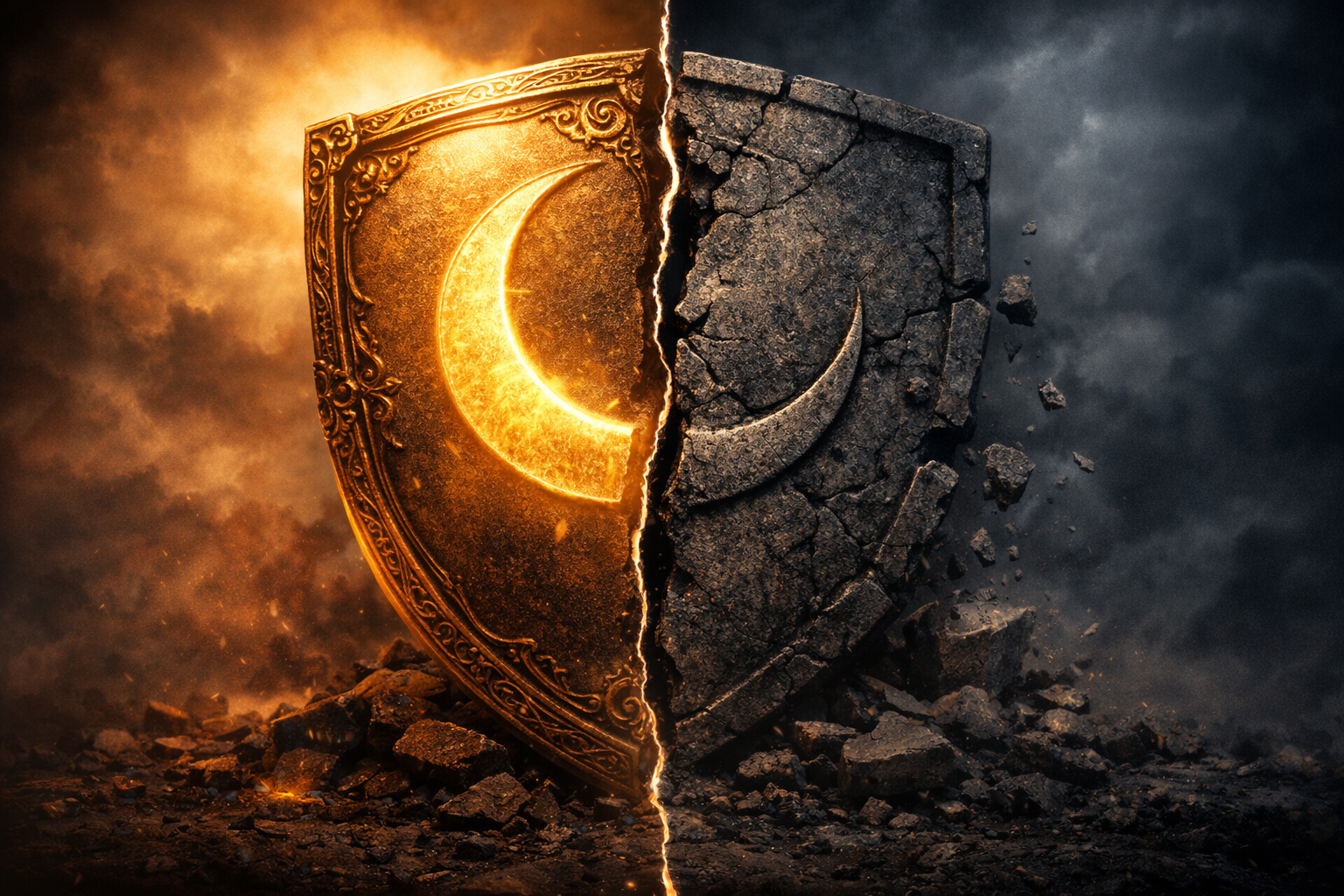
On 3 March 1924, the Shield of the Muslims was shatered. Abdulmecid II, the last Khalifah, was given a few hours notice and expelled from Istanbul by dawn. He left with a single suitcase. Just like that, an institution that had existed in one form or another for over 1,300 years was erased by a stroke of a pen.
What was lost was not just a title or a symbolic figurehead. The Khilafah was the political authority of the Muslim world, the institution responsible for implementing Islamic law, protecting Muslim lands, and representing the Ummah as a unified body on the world stage. Most of us were not taught this in school. Many of us grew up without knowing what was lost that day but its absence has shaped every decade since.
One Hundred Years of Harm
Look at the last century of Muslim history and be honest about what you see.
Within decades of 1924, Palestine was colonised and its people expelled from their land. The very year the Khilafah fell, the Sykes-Picot carve-up of the Muslim world was already in effect, borders drawn by European powers to serve European interests, splitting Muslim communities into artificial nation-states designed to keep them weak and divided.
Iraq was invaded in 2003 on the basis of lies, over a million people killed, and an entire society destabilised for a generation. Syria descended into a war that killed hundreds of thousands and displaced millions, while the world debated and deliberated and did nothing meaningful. Libya, once the most prosperous country in Africa, was bombed into competing warlord factions and never recovered. In Kashmir, Muslims have lived under military occupation and collective punishment for decades. The Uyghur Muslims of China face what credible reports describe as the largest internment of a religious minority since the Second World War. The Rohingya were driven from Myanmar in what can only be called a textbook case of ethnic cleansing.
These are not separate tragedies. They are connected by a single reality: there is no political authority in the world today that has both the obligation and the power to stand up for Muslims as Muslims. Each Muslim-majority country looks after its own national interest. None of them represent the Ummah.
Gaza Has Shown Us the Truth
Gaza did not reveal something new. It revealed something old. The oppression, the impunity, the powerlessness of Muslim governments to act, this has been the reality for 102 years. What changed is that this generation watched it happen in real time, on their phones, with nowhere to look away.
Social media pulled back the curtain. The bombing of hospitals, the killing of children, so called Muslim governments issuing careful statements while doing nothing of substance, international institutions exposing their own double standards in plain sight. What our grandparents were told in fragments, we saw in full. And the question it forces is not a new one. It is the same question that should have been asked for the past 100 years: where is the political authority that exists to protect this Ummah? The answer, then and now, is the same. There isn’t one.
The Quran Has Already Given Us the Answer
Allah (SWT) says in the Quran:
“Hold firmly to the rope of Allah all together, and do not be divided.”.
Al-Imran:103
This is not just spiritual advice. It is a political instruction because unity is an obligation, not an aspiration.
The Prophet (saw) established a state in Madinah. He did not leave the affairs of the Muslims to chance or to the goodwill of others. He built institutions, appointed leaders, and created a political framework that protected the community and extended justice. That model was not meant to end with him. It was a template.
“The imam is a shield; you fight from behind him and are protected by him“
Prophet Muhammad (saw)
The scholars throughout Islamic history were unanimous that establishing a Khalifah is a collective obligation upon the Muslim Ummah. This obligation did not expire in 1924. It became more urgent.
What This Means for Us
The restoration of the Khilafah will not happen through passivity or despair. It requires Muslims globally to build a genuine political consciousness rooted in Islam, to reject the idea that secular nation-states are the permanent and natural order, and to work consistently, intellectually, and collectively toward a unified Islamic political entity.
That means understanding your deen deeply. Reading the Quran not just for comfort but for guidance on how society should be organised. Learning the Seerah not just as history but as a political roadmap. Engaging with ideas, having difficult conversations, and refusing to accept that the current state of the Muslim world is inevitable.
The Work Begins Here
102 years is a long time. But every century in Islamic history has had its tests. The Crusades lasted longer. The Mongol invasions were more devastating. And yet the Ummah endured, rebuilt, and rose.
The destruction of the Khilafah was not the end of the story. It was the end of a chapter. What comes next depends on whether this generation decides to be spectators or participants. On this anniversary, make a choice: learn, engage, and commit to being part of the generation that answers the call
“O you who believe, respond to Allah and to the Messenger when he calls you to that which gives you life.”
Al-Anfal:24
