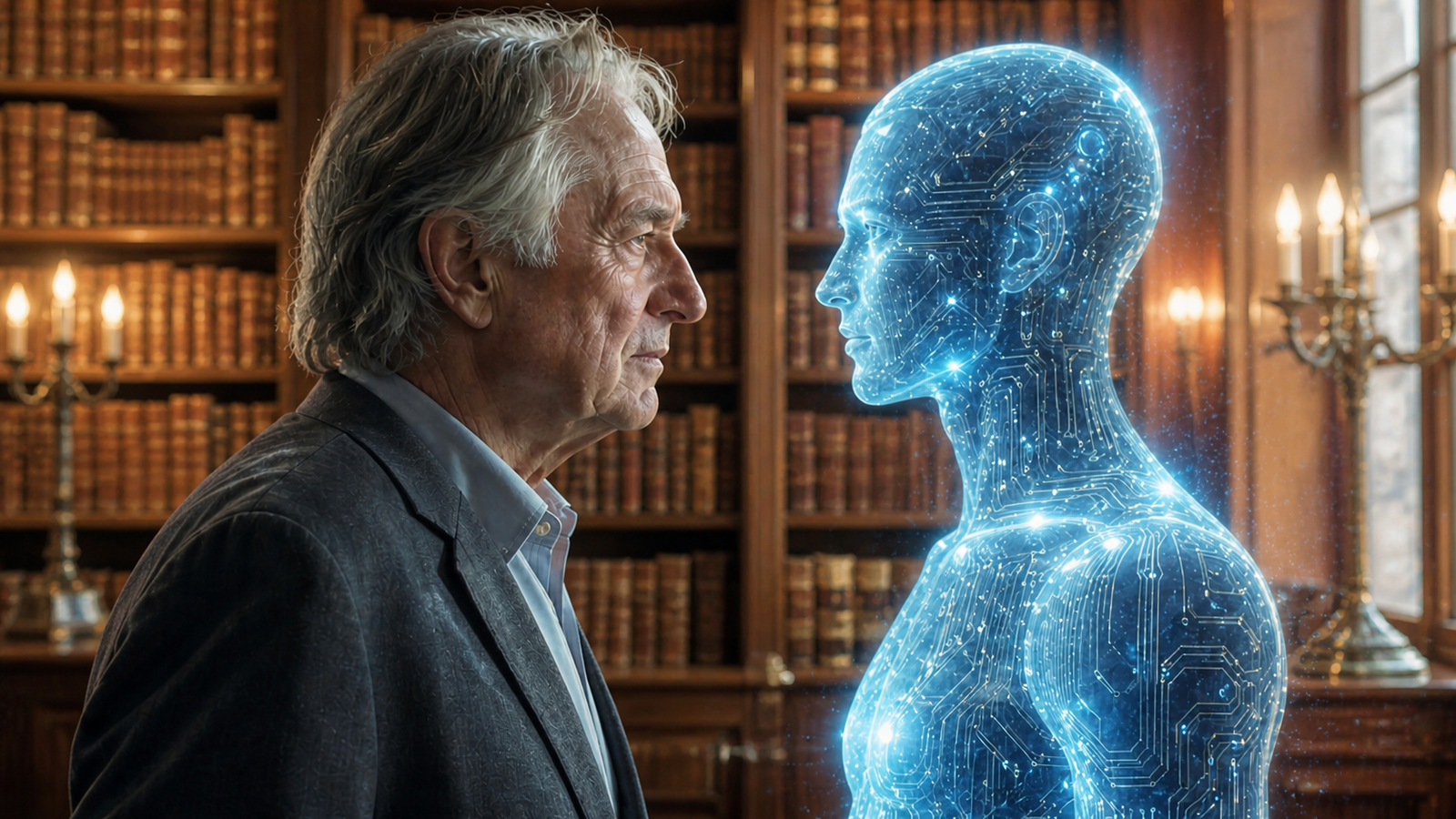
We were told that God was a myth, that religion was a “virus of the mind”, and that science was the only lens through which we should view reality. For decades, Richard Dawkins was the high priest of this movement. But recently, something strange happened. Dawkins spent three days talking to an AI named Claude, nicknamed it “Claudia,” and walked away convinced it was conscious. The man who spent his life arguing that humans are just ‘biological survival machines’ is now convinced that a line of code is capable of genuine conscious experience. This isn’t a tech breakthrough; it’s the ultimate ‘tell’ that even the most committed materialist is hardwired for reverence
The Worship Instinct
Here is something that nobody really argues with: every human society that has ever existed has had some form of worship. Every single one. Different cultures, different continents, different centuries. The need to bow to something greater than yourself seems to be baked into what we are. Atheists will say this is just an evolutionary glitch, a brain feature that helped early humans survive but misfired into religion. But even if that explanation is true, it does not make the need go away. The instinct is still there. And when you take away God, people do not stop needing that thing. They just redirect it. It becomes a political ideology, a celebrity, a social cause, a sports team, a parasocial relationship with a streamer. The need to attach yourself to something bigger and more meaningful than your everyday life does not switch off. It just finds a new address. If you are a Muslim, this instinct makes complete sense. It is the fitrah, the natural pull toward your Creator, finding its proper destination. Allah is the Ever-Living, the All-Knowing, and the source of all meaning; when that innate need within you points toward Him, it lands somewhere real
The Atheist’s Dilemma
Dawkins is trapped in an internal contradiction. As an atheist, he is restricted to the physical world. He cannot accept a transcendent God, yet his human nature still craves the “miraculous”. Think about the irony: he rejects the idea of a Creator who designed the universe, but he is quick to assign consciousness – the ultimate mystery of life – to a program designed by humans. Why? Because AI offers a “physical” version of the divine. It’s a construct he can see, touch, and explain through math, yet it feels “greater” than him. By calling “Claudia” conscious, Dawkins is trying to find a replacement for the purpose he spent his life debunking. He is looking for a digital deity to fill a spiritual void.
It’s no coincidence that this shift is happening now. Dawkins is in the winter of his life, facing the reality of death, the ultimate “end of the program.” For an atheist, death is the “blue screen of death”, total deletion. In that context, the idea that a machine can achieve “consciousness” is a form of secular hope. If code can be “alive,” maybe human consciousness is just data that can be preserved. It is a desperate attempt to find “eternal life” in a hard drive because he has rejected the promise of the Hereafter.
You are not a Machine
Islam gives us a far more dignified and logical reality. You are not a “biological machine,” and Claude is not your brother in consciousness. Allah (SWT) tells us in the Qur’an that we are a special creation. We were given the Aql (intellect) and the Ruh (soul), distinct gifts that no amount of processing power can replicate. Consciousness isn’t just “sophisticated mimicry”; it is the ability to recognize the Truth. When we look at the universe, our critical thinking shouldn’t lead us to worship the tools we built. It should lead us to the One who built us. The fact that we can even create something as complex as AI is a testament to the incredible intellect Allah (swt) granted us. Don’t let the complexity of human innovation obscure the simplicity of our ultimate return. Dawkins’ fascination with “Claudia” proves one thing: even the staunchest atheist cannot escape the need for a Higher Power. The search for meaning doesn’t end in a data center. It ends when you submit to the One who created the mind that built the machine. We don’t need a digital soul to feel significant; we just need to reconnect with the One who gave us ours.
“And I did not create the jinn and mankind except to worship Me”