

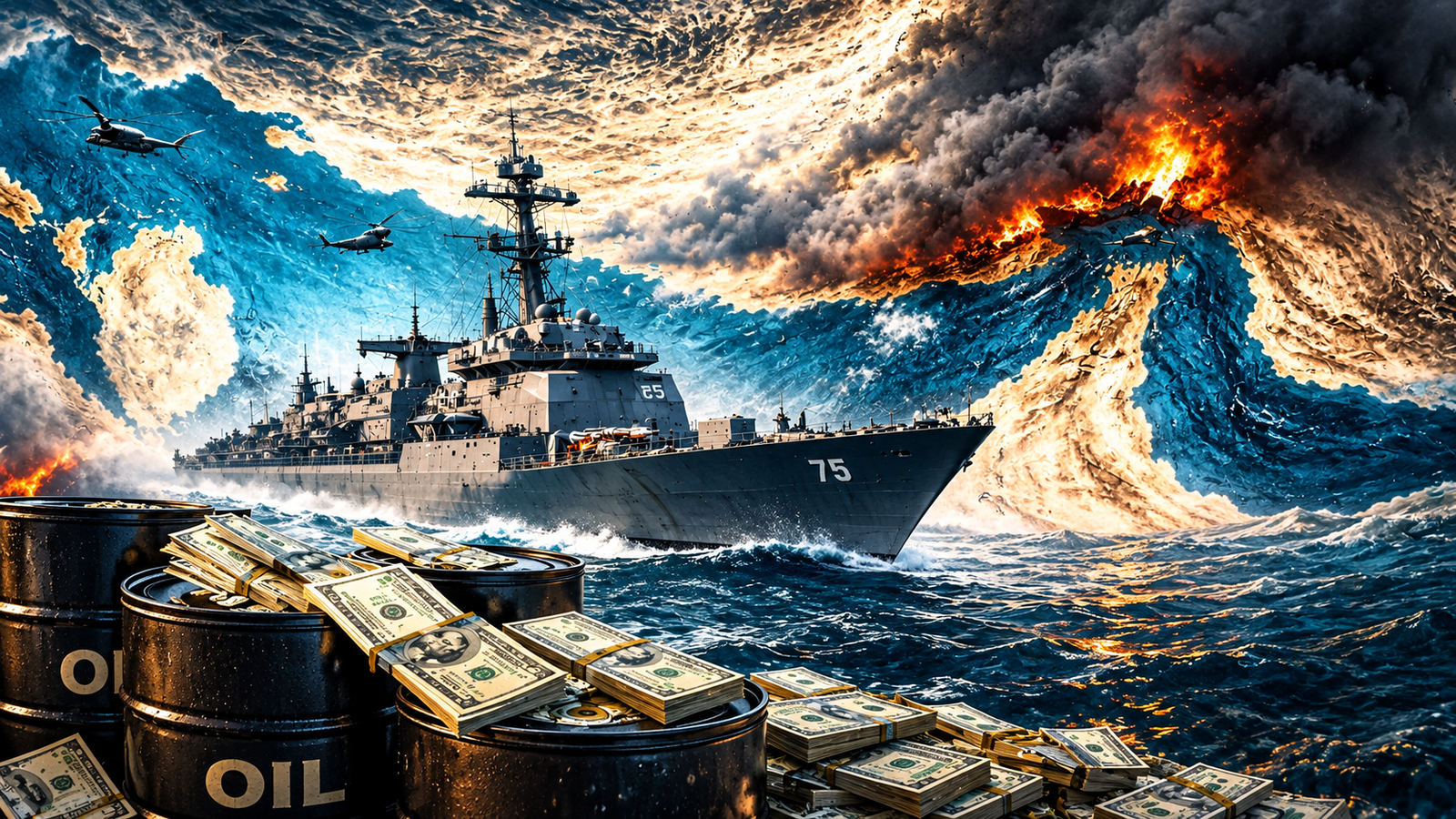
The US-Israel war against Iran has had a significant impact on world oil trade. The attacks on oil facilities in the Gulf and Iran and the closures of the Strait of Hormuz, a key transit route for around 20% of global oil trade, has restricted shipments and pushed up oil prices on global markets. The price of natural gas has followed suit.
There have been knock-on direct effects on the cost of sea transportation, fertiliser supplies and prices. These will be passed on to food prices, in the first instance and then food supplies, depending on the length of the war, the longer it goes on the larger and more widespread the economic impact.
Oil is internationally traded and as a result the hike in global prices is impacting the price of gas for Americans even though the US is self-sufficient in oil.
The impacts of the war will not only be felt across sectors, but regionally and more generally through a widespread slowdown in global economic trade and growth.
Gulf regional economic decline
The Gulf region is totally dependent on oil trade. Some Gulf states receive up to 80% of foreign exchange from selling hydrocarbons to the rest of the world. This in turn finances the lavish lifestyles in the Gulf and keeps the population quiet. The petrodollar – meaning oil can only be traded in dollars according to US edict – is recycled to Western economies through Gulf sovereign wealth funds buying tech stocks in the USA and real estate in London and European capitals.
Those who love wealth only love one thing more, and that’s their life. Tourists were the first to take flight from the Gulf. This exposes the fragile economic strategy of basing regional development on tourism. The Iranian blockade of Western oil supplies will dry up foreign exchange into Gulf states while security uncertainty leads to the economic flight of capital and resources. The region is likely to go into a downturn, the depth of which will be directly linked to the length of the war. This could lead to social unrest with authorities already punishing residents for sharing information deemed to undermine Gulf states.
Accelerating the decline of the US dollar
Foreign holdings of US dollars have been on the decline for over a decade, facilitated by China’s design to decouple its dependence on US trade and Treasuries, COVID and the Ukraine war. The war with Iran will only accelerate this process with potentially transformative ramifications.
The recycling of the Petrodollar from the Gulf to Western economies will be seriously curtailed the longer the war goes on, with the following impacts:
- Reduced flows of dollars into Western capital markets hitting stock prices in NY, London and European cities
- Reduced demand of US Treasuries, leading to higher interest rates, and higher cost of US debt
- Reduced demand for US dollars, and further eroding of the value of the dolla
- Each of these impacts has the potential to spiral downwards, precipitating contagion.
The direct energy impact
Some countries have begun to ration fuel and have advised their populations to work from home including in Pakistan despite the country’s efforts to negotiate a peace deal. Where supplies have been maintained it has been at the cost of up to 20% higher fuel prices at the pumps.
The cost of energy is like a poll tax. Everyone pays the same higher prices for oil and gas irrespective of personal income and wealth. However, as prices rise, the higher cost is a larger proportion of poorer people’s income, and they cut back on keeping warm to pay for food
Older people and families that spend most of their income on energy and food are impacted most. The cost-of-living crisis sweeping across the globe will intensify further as people once again have to choose between eating and heating. Even before the current crisis, fuel poverty was linked to several thousand deaths each year in Britain, often estimated in the range of around 7,000 to 10,000 annually.
The wider economic fallout
General inflation is expected to increase as prices rise for everyday items which rely on transportation to get goods to market. Reduced fertiliser supplies will push up food prices. Price rises reduce people’s ability to provide for themselves and their families.
In most developed economies consumption represents around 70%-80% of GDP. Falling consumption may participate in a wider drop in economic growth the longer the war carries on. Unemployment combined with higher inflation is termed stagflation which has longer term recessionary impacts. Stagflation leaves very little policy options and persistently high prices combined with high unemployment could lead to a depression in the worst affected economies.
Islam’s answer to the current crisis
The current crisis exposes many inherent flaws in the capitalist system, which the Muslim world has adopted, following the example of their Western counterparts.
The Gulf states are little more than glorified cities, and have very weak economic foundations, artificially crafted into nation states by British diplomats post WWI. The lines in the sand dividing the Gulf were drawn by design and were meant to keep these so-called states economically dependent.
Despite recent 2030 visions, their economies remain dependent on oil trade, tourism and real estate. There isn’t a solid base for industrialization to the extent that much of the oil that is drilled is directly exported and not even refined domestically. Such economies will always be vulnerable to regional and global forces controlling their destiny, as exposed by the war.
Islam promotes political unity as a means to achieve economic independence. If united, these states would have sufficient population, resources, and geographic scope to be economically independent. Combined human capital can be brought together with finance, natural resources, land and geography to create strategic depth to sustain a formidable, independent state. At the same time the economic principles embedded in the sharia can be used to develop an industrialised, diversified economy based on meeting the needs of all the population through self-sufficiency and wealth circulation.
